
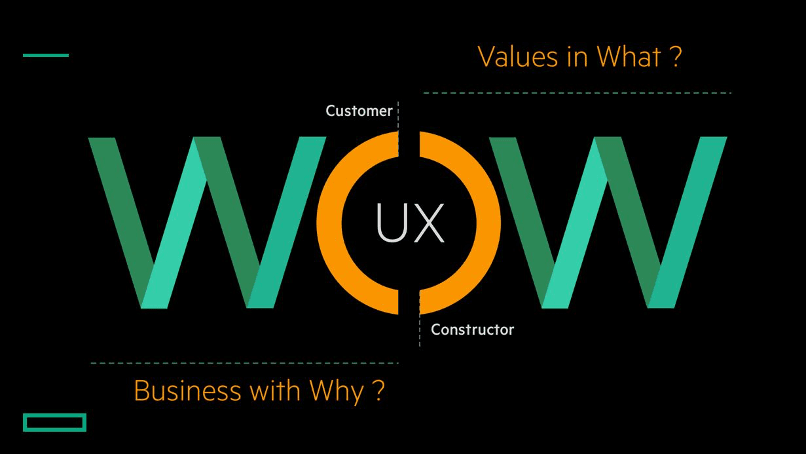
What is WOW?
Previously in my last two posts (Part 1, Part 2), I covered the first three stages of a methodology our group developed called WOW (Why On What with customers and constructors). This workflow demonstrates how to quantify the value of the design process and provides enterprise UX designers with a practiced and perfected path to achieve success.
The WOW methodology helps creative teams focus on four important stages of a project:
- Uncover why the business (and this particular project) needs a UX
- Involve the customer early in the design phase
- Ensure the constructor (developer) has the right information during design implementation
- Convey the business value of the design
Now that we’ve helped uncover why a project needs UX design (by illustrating the benefits of the tools it offers and shown how a designer’s use of empathy can smooth the path to achieving a successful design), I’d like to cover the last part of WOW. In this article, I’ll show you how to articulate the business value of the design process.
UX deliverables with data, comparisons, and designs
The tools that designers use to create designs, such as wireframes or screen designs, are not enough to demonstrate the value of design. Audiences understand the screens but, at the same time, they also like to debate the screens. Using data and comparison studies can help avoid vague and lengthy debates that rarely result in any specific outcome.
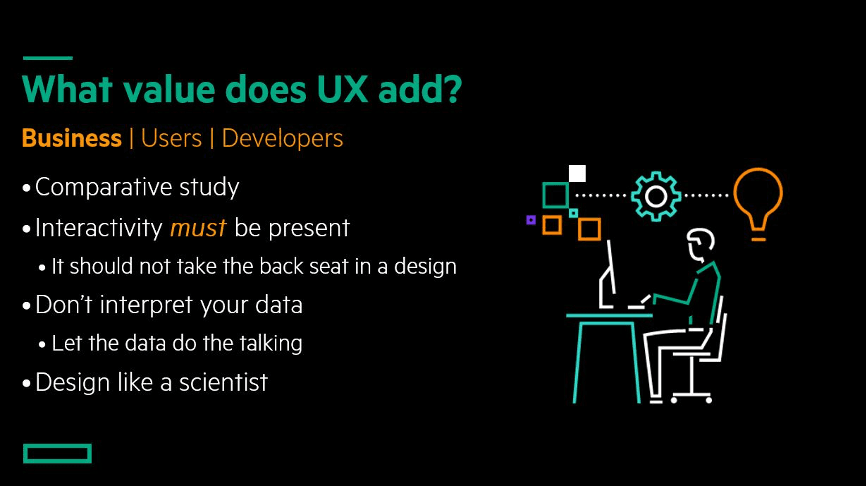
Our data shows that UX-reviews were among the lengthiest meetings for our team over the past few years. I agree these meetings are very engaging!! But just a mention of a small number of data points can bring the meeting duration down by 10-12 minutes.
Wireframes versus the voice of a customer?
Wireframes have a notorious history of being treated as a designer’s opinion. Wireframes, as primary deliverable, are not enough to help stakeholders realize the value the UX design process brings to the project. Facts, testimonials, and comparative studies should be used as the primary deliverables to be given to stakeholders. Wireframes should only be used as a secondary method that supports the primary deliverables.
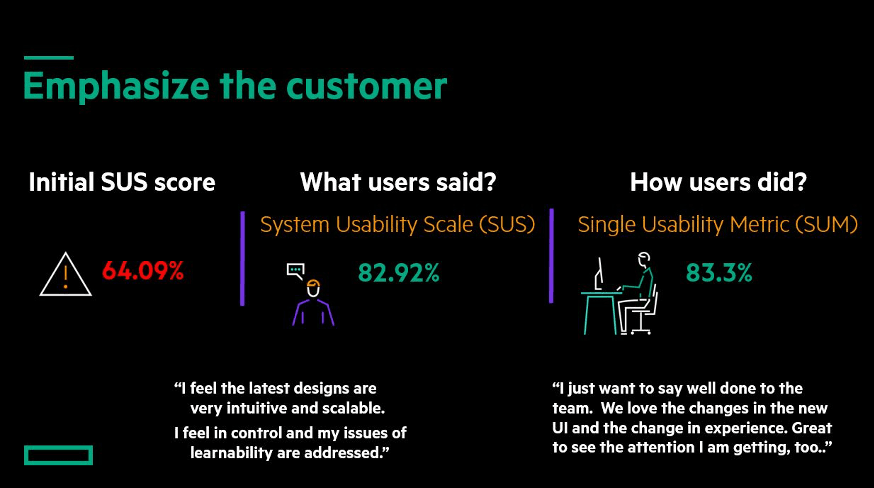
As part of the WOW process, designers will have gone through stages that helps them accumulate the facts required to sway opinion. They will be able to show how the UX design process added value from the very beginning, identifying potential gaps in the project and adding competitive value. They will be able to express the value of the UX in customer terms, relaying specifically what customers found helpful and necessary for the success of the product experience.
Key takeaways
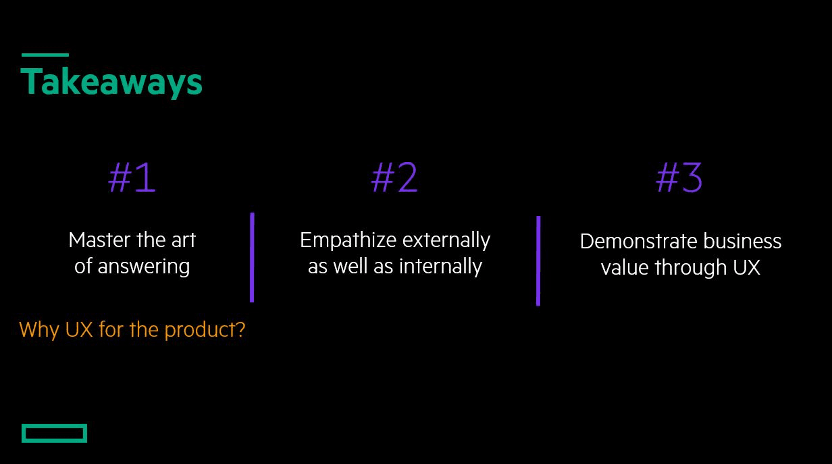
As I’ve shown in these past three blog posts, there is a lot more to UX design than what is often considered. UX design isn’t just used to make an application look pretty. UX design brings many benefits to the product development process, in that it:
- Offers specific UX tools and techniques that can help identify the existing gaps in the product.
- Promotes empathy, not just with customers but also with UI developers (the constructors).
- Provides tools to demonstrate the business value achieved through UX.
I hope that, by using this WOW methodology, you will find it easier to convince others of the value of the UX design process and achieve greater success in your next project. I’m always interested in hearing about your experience. Feel free to reach out to me at @uxwithparul if you have any questions. Don’t forget to check back at HPE DEV and see what other tutorials we have that can make your life easier.